


The Space Economy
Is Growing Fast.
But a Hidden Bottleneck Could
Decide Who Wins.
Sponsored Content paid for by Starfighters Space
The small satellite boom is exposing a quiet bottleneck in space access — one that carries serious implications for America’s national security.
What was once an operational inconvenience is now a strategic vulnerability for commercial operators and defense planners alike.
The space economy is growing faster than most people realize. Satellites now underpin communications, navigation, Earth imaging, weather forecasting, intelligence gathering, and military operations. Space is no longer a futuristic ambition or a speculative technology sector. It is a working infrastructure — and like any system growing this fast, strain is beginning to show. That strain isn’t about whether satellites can be built or whether rockets exist. Demand is already here.
The pressure point is delivery

In mature infrastructure systems, delivery failures matter more than production capacity. And space is entering that phase faster than most investors realize. Getting payloads to orbit — on time, to the right orbit, and when conditions actually demand it — has become one of the most underestimated constraints in the entire space economy. This is where a relatively unknown aerospace company, Starfighters Space (FJET), has begun to draw attention. And it’s not just because it builds rockets or satellites. It’s because it focuses on a quieter, more difficult problem: the logistics of speed, scheduling, and iteration in space access. The pressure point is delivery. In mature infrastructure systems, delivery failures matter more than production capacity. And space is entering that phase faster than most investors realize. Getting payloads to orbit — on time, to the right orbit, and when conditions actually demand it — has become one of the most underestimated constraints in the entire space economy. This is where a relatively unknown aerospace company, Starfighters Space (FJET), has begun to draw attention. And it’s not just because it builds rockets or satellites. It’s because it focuses on a quieter, more difficult problem: the logistics of speed, scheduling, and iteration in space access.
Interest in Space Investing is Surging — But Infrastructure Is Where Bottlenecks Form
Much of the recent excitement has been fueled by anticipation around a potential SpaceX IPO, widely expected to be one of the most consequential public offerings in modern history. The scale of that event underscores just how large and how central the space economy has become. But experienced investors recognize a familiar pattern.
In every major industrial expansion — from railroads to oil to semiconductors — the most durable returns often came not from the most visible brands, but from the infrastructure that made expansion possible.
Picks and shovels. Rail didn’t scale without steel suppliers and logistics hubs. Oil didn’t boom without pipelines and refineries.
The internet didn’t explode without data centers and fiber networks. Space is no different.As industries scale, attention stays on the visible winners — but capital eventually migrates to the systems that keep everything moving. Space is now approaching that inflection point. Rockets dominate headlines. Satellites dominate balance sheets. But beneath both sits a growing infrastructure challenge: testing capacity, scheduling flexibility, and responsive access. That is where Starfighters Space (FJET) operates.
Smallsats Are Booming. Launch Access Isn’t.
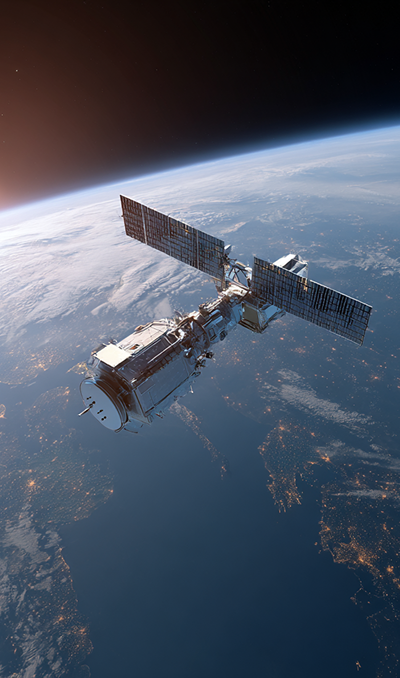
Over the past decade, the satellite industry has fundamentally changed. Instead of launching a few massive spacecraft designed to last decades, operators now deploy constellations of small satellites — nanosatellites and microsatellites that are cheaper to build, faster to iterate, and easier to replace.
This shift enables faster innovation and greater resilience. If one satellite fails, others fill the gap. If technology improves, new units can be launched quickly. As a result, the number of satellites in orbit has exploded. More than 11,000 active satellites now orbit Earth, with thousands more planned over the next decade.
Market researchers estimate the small satellite segment could grow from roughly $4 billion today to nearly $14 billion by the end of the decade. Growth is driven by demand for broadband connectivity, Earth observation, climate monitoring, defense applications, and commercial data services. But this growth has exposed a structural weakness.
Launch access has not scaled at the same pace.
The Rideshare Bottleneck
Most small satellites don’t launch independently. They ride-share on larger rockets as secondary payloads. This model keeps costs down — but it introduces friction.
When satellites share a launch:
- Schedules are shared
- Orbits are negotiated
- Timelines are interdependent
For commercial operators, this can mean missed revenue windows. For defense users, it can mean delayed coverage at precisely the wrong moment.
If one customer isn’t ready, others wait.
If the primary payload slips, everything slips.
If the orbit isn’t ideal, smaller satellites adjust — or compromise.
For operators dependent on real-time data or time-sensitive coverage, those delays aren’t trivial. They can mean missed contracts, degraded service, or lost strategic advantage.
In simple terms:
Building a satellite has become easier than launching it when you actually need to.
Why This is a National Security Problem
This delivery challenge doesn’t just affect commercial operators. It affects defense.
Modern U.S. military systems rely deeply on space-based assets.
In fact, communications, navigation, intelligence, missile warning, and battlefield awareness all depend on satellites functioning continuously. Increasingly, the Department of Defense and the U.S. Space Force are shifting toward networks of smaller satellites rather than a few large, vulnerable ones.
This approach improves resilience. If one satellite is disabled, others can compensate. This shift is not theoretical. U.S. defense planners are actively redesigning space architectures to assume disruption — including jamming, degradation, or loss of orbital assets.
But resilience depends on one critical factor:
The ability to deploy, test, and replace satellites quickly.
If replacement takes months instead of weeks — or years instead of months — the advantage disappears. This is where Starfighters Space (FJET) can make a significant impact
Defense Is Shifting Toward Speed
U.S. defense priorities are changing. The recently proposed $1.5 trillion defense budget, more than 50% higher than the prior fiscal year, reflects a renewed emphasis on readiness, iteration, and technological advantage. Defense leaders have been explicit about the goal: rebuild capability, shorten development cycles, and accelerate deployment across critical domains. This includes space and hypersonics. Speed is no longer a luxury.
It’s a strategic requirement.
Hypersonics: Where Testing Becomes the Constraint

Hypersonic systems — operating at speeds above Mach 5 — are among the most demanding technologies in aerospace.
They are not validated through a single breakthrough.
They succeed through repetition:
Test. Measure. Adjust. Test again.
These systems operate under extreme thermal, structural, and aerodynamic stress.
Small design changes can produce outsized effects.
Which means simulations alone aren’t enough.
Real-world flight data is essential.
And that is where another bottleneck appears. Without rapid testing, development timelines stretch.
And in deterrence-driven domains, time itself becomes a strategic liability.
The Testing Capacity Gap
Traditional government test ranges are limited.
Schedules are crowded, and windows are scarce. Access can take months — or longer — regardless of funding availability. As defense programs push for faster iteration, this mismatch becomes acute.
Programs want to move quickly, but infrastructure can’t always keep pace.
Testing delays cascade downstream. Development slows. Deployment slips. This is especially true in hypersonics, where repeated validation is non-negotiable. And this is where Starfighters Space (FJET) already plays an active role.
Starfighters Space: A Commercial Platform for Real-World Testing
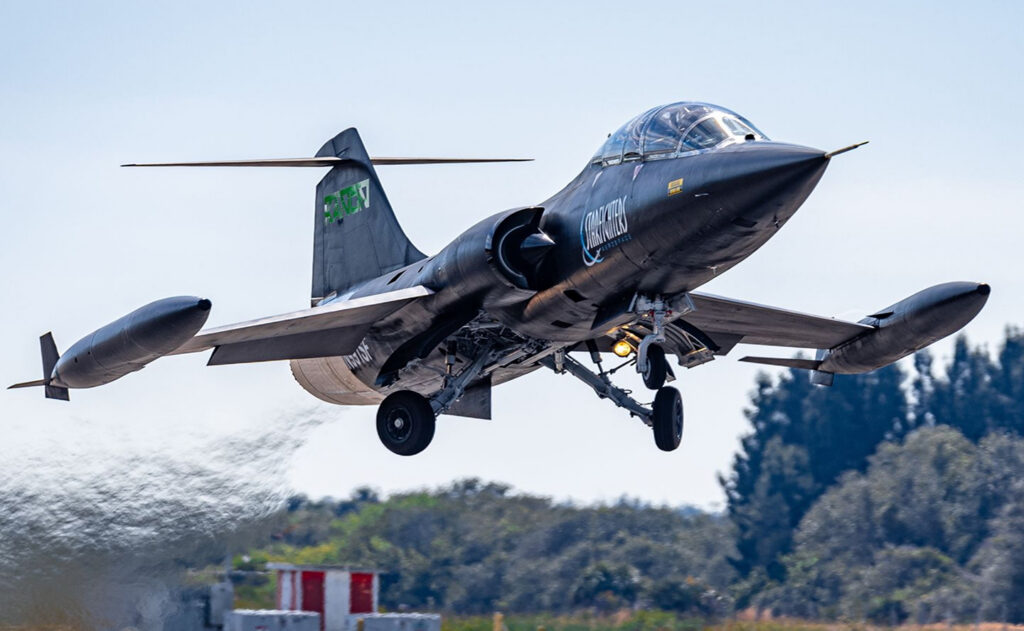
Starfighters Space (FJET) owns and operates the world’s largest privately owned fleet of F-104 supersonic jets. These are aircraft originally designed for extreme speed and altitude missions. They are proven, military-grade aircraft adapted for modern testing needs. They can fly at sustained MACH 2 speeds.
Starfighters uses these jets as flying test platforms, capable of carrying experimental systems, sensors, propulsion components, and instrumentation into real-world flight environments.
For aerospace and defense customers, the value is immediate:
- Faster access to flight testing
- Flexible scheduling
- Repeatable missions
- Operational conditions — not simulations
Major aerospace companies, including General Electric, have already used Starfighters’ aircraft to test advanced propulsion technologies at supersonic speeds — choosing a commercial platform rather than waiting for limited government test range access. That decision is telling. It suggests that testing capacity — not ambition or funding — has become the limiting factor.
Why Testing Speed Is Now Strategic
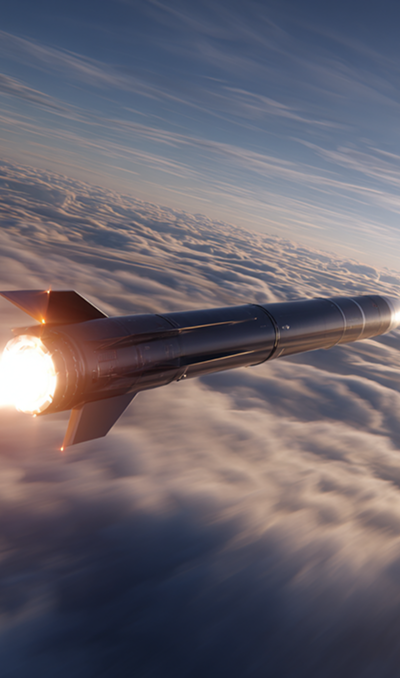
Testing used to be a background function. Today, it’s a competitive advantage. Programs that can test, refine, and retest faster gain momentum. Programs that can’t fall behind. In an era of rising geopolitical competition, iteration speed translates directly into readiness. The role of Starfighters Space (FJET) is not to design weapons or build satellites. It is to clear the infrastructure bottleneck that slows everything else.
The Second Market:
Responsive Access to Orbit
The same infrastructure logic applies to small satellite launches. As constellations grow, operators need responsiveness, not just lift capacity. When a satellite fails, replacement speed matters. When coverage gaps appear, timing matters. When missions are time-sensitive, delays undermine value. Traditional launch systems struggle here. In operational environments, waiting for the next available rideshare slot is often not an option.
Starfighters’ (FJET) Air-Launch Changes the Equation

Air-launch changes how satellites get to space. Rather than depending on tall launch towers and fixed ground pads, payloads are taken high into the sky by aircraft and released from around 45,000 feet before their rockets ignite above most of the atmosphere. Starfighters’ current system uses a specialized air-launch rocket called STARLAUNCH I, carried aloft by an F-104 jet to deliver small payloads above the atmosphere. The next generation, STARLAUNCH II, is being designed with about 49% more propulsion thrust than the first model. That extra power aims to enable air-launched delivery of small satellites into Low Earth Orbit (LEO) — roughly 160 kilometers (99 miles) above Earth — enabling more agile, on-demand access. Starfighters’ current system uses a specialized air-launch rocket called STARLAUNCH I, carried aloft by an F-104 jet to deliver small payloads above the atmosphere. The next generation, STARLAUNCH II, is being designed with about 49% more propulsion thrust than the first model. That extra power aims to enable air-launched delivery of small satellites into Low Earth Orbit (LEO) — roughly 160 kilometers (99 miles) above Earth — enabling more agile, on-demand access.
Starfighters’ (FJET) aircraft-based approach offers:
- Flexible scheduling
- Reduced dependence on congested launch sites
- Greater control over timing and trajectory
- Shorter lead times
Aircraft can potentially operate from multiple runways throughout the U.S. or abroad. Missions can be planned around readiness — not shared manifests.
This doesn’t replace large rockets. It complements them.
One Fleet, Two Big Markets
A key factor that makes Starfighters Space (FJET) unusual is that the same aircraft fleet supports both markets. The jets that enable hypersonic testing also underpin air-launch operations. This creates operational leverage. Starfighters aims to generate revenue from flight services — testing missions, research support, and specialized aerospace operations.
Air-launch expands that model into a second growth market without requiring a separate fleet or entirely new infrastructure. That diversification matters. It reduces reliance on a single revenue driver while increasing asset utilization.
This is a critical factor in capital-intensive aerospace businesses.
Leadership and Execution

Starfighters Space (FJET) is not a speculative startup. It has been led by experienced aviation and aerospace professionals. Rick Svetkoff, a former U.S. Navy pilot and commercial aviator, founded Starfighters in 1996 and operated as the company’s President and CEO. After taking the company public, at the age of 72, he has just stepped down to enjoy a well-deserved retirement.
In his place, Tim Franta has been promoted from, Vice President of Development to CEO. Mr. Franta is currently developing the STARLAUNCH air-launch system, designed to be the smallest rocket capable of making it to low Earth orbit using a Lockheed F-104 as the launch platform.
This Moment Matters
The space economy is maturing. As it does, infrastructure constraints are becoming visible.
More satellites. More testing needs. More urgency. But the same number of launch pads. The same number of test ranges.
The same scheduling friction. Starfighters Space (FJET) is positioned at that intersection. Not chasing spectacle.
Solving logistics.
Why Infrastructure Wins When New Frontiers Open
History offers a useful guide for understanding moments like this. In every major expansion — physical or technological — the biggest gains didn’t always go to the pioneers. They often went to the infrastructure builders who enabled scale. During the California Gold Rush, most prospectors failed. The merchants who sold tools, transport, and logistics made steadier fortunes. In the early internet era, portals came and went — but data centers, fiber networks, and backbone infrastructure became indispensable. Space is entering a similar phase.
The early chapter was about access: Who could get to orbit at all? The next chapter is about reliability: Who can support routine operations at scale? That shift changes what matters.
It elevates logistics over spectacle. Scheduling over slogans. Throughput over novelty. Starfighters Space (FJET) sits squarely in that infrastructure layer. It doesn’t compete with satellite operators. It doesn’t compete with rocket builders. It enables them — or offers alternatives when traditional systems strain.
That positioning doesn’t guarantee success. But it does align the company with a proven historical pattern: when industries mature, bottlenecks migrate downstream, and infrastructure providers gain relevance.
“When industries mature, bottlenecks migrate downstream,
and infrastructure providers gain relevance.”
Starfighters’ Operating Model:
Built for Reuse, Not One-Offs
One reason Starfighters Space (FJET) fits this infrastructure narrative is its operating philosophy. The company isn’t built around single-use assets or headline launches. Its fleet is designed for reuse, repeatability, and cadence.
Each aircraft represents a reusable platform capable of flying multiple missions. That matters in testing environments where iteration speed is everything — and in launch environments where responsiveness is valued.
From an operational standpoint, this creates several advantages:
- Higher asset utilization and lower marginal cost per mission as flight cadence increases
- Ability to serve multiple customers across different mission types
- Flexibility to adapt missions without redesigning the platform
This is a fundamentally different model from traditional space access, which often involves long build cycles, high fixed costs, and limited launch windows. Starfighters’ approach treats flight as a service, not an event. That distinction matters as aerospace development becomes more iterative and less episodic.
The Strategic Timing
The convergence happening now is unusual.
At the same time:
- Small satellite demand is accelerating
- Hypersonic development timelines are compressing
- Defense budgets are rising
- Launch and testing infrastructure remains constrained
Those forces don’t always align. When they do, they tend to surface new classes of companies. Companies that exist not because they invented demand, but because they relieve pressure. Starfighters Space (FJET) didn’t create the bottlenecks it addresses. It exists because those bottlenecks have become visible. And visibility is often the first step toward value recognition. For investors who focus less on headlines and more on where capital and urgency are converging, Starfighters Space (FJET) begins to look less like a curiosity — and more like a situation worth tracking.
10 Reasons Why Starfighters Space (FJET) Is Showing Up in Serious Conversations
1
Starfighters Is Positioned at a Real Bottleneck — Not a Speculative Trend
Many space companies are chasing headline projects: bigger rockets, flashier spacecraft, or distant missions. Starfighters is focused on something far more practical — relieving congestion in testing and launch access, two areas already straining under real-world demand. Bottlenecks don’t require belief; they require solutions.
2
One Asset Base Serves Two Growing National Priorities
The same supersonic aircraft fleet supports both hypersonic testing and responsive small satellite deployment. That means Starfighters can participate in two expanding markets tied directly to defense readiness and space deployment speed.
3
Leadership With Real Flight, Defense, and Operational Experience
Starfighters (FJET) is led by aviation professionals, not theorists. CEO Rick Svetkoff is a former U.S. Navy pilot with decades of experience flying, maintaining, and commercializing high-performance aircraft — a background that aligns directly with the company’s mission of executing demanding, real-world operations.
4
Hypersonic Testing Is Becoming a Strategic Priority, Not a Side Project
As defense spending rises and hypersonics shift from research to deployment, testing capacity has become a limiting factor. Starfighters (FJET) already operates in this niche, offering flight-ready platforms that can supplement congested government ranges without replacing them.
5
Air-Launch Offers a Different Kind of Optionality
Starfighters’ air-launch model doesn’t compete head-on with heavy-lift rockets — it complements them. For small payloads and time-sensitive missions, flexibility and control can matter more than raw lift, and that’s where air-launch creates strategic relevance.
6
Commercial Validation From Major Aerospace Players
The company’s aircraft have already been used by major firms like General Electric for advanced propulsion testing. That kind of engagement suggests customers value access, speed, and repeatability enough to pay for a commercial alternative. Starfighters customers also include Lockheed Martin, Innoveering, Meggitt, Space Florida, and the U.S. Air Force Research Laboratory.
7
Infrastructure Businesses Tend to Be Underappreciated Early
Historically, the biggest returns in industrial expansions often came from the systems beneath the spotlight — rail networks, pipelines, ports, or cloud infrastructure. Starfighters fits that pattern by enabling activity rather than competing for headlines.
8
National Security Tailwinds Extend Beyond Any Single Administration
Defense priorities focused on speed, testing, resilience, and space-based systems predate and outlast individual budget cycles. Starfighters’ focus on execution and access aligns with structural defense needs rather than short-term policy shifts.
9
The Company Is Operative Today — Not a Concept
Starfighters (FJET) already flies missions, maintains aircraft, and supports paying customers. That operational reality reduces some forms of execution risk compared to companies still waiting to prove their platforms outside of simulations. The company is located at NASA’s Kennedy Space Center in Florida alongside SpaceX, Blue Origin, and United Launch Alliance.
10
The Space Economy Is Maturing — And Logistics Matter More With Scale
As space becomes infrastructure rather than experimentation, reliability and scheduling start to outweigh novelty. Companies that can move faster, adapt quicker, and reduce dependency on crowded systems become more valuable as the ecosystem grows.
A Note on Risk — And Why This Moment Still Matters
No aerospace company operates without risk, and Starfighters Space (FJET) is no exception. The company operates in regulated markets where execution, timing, and customer adoption all matter. Air-launch systems must navigate certification requirements. Defense and aerospace budgets can shift with political priorities. Commercial customers must be willing to adopt new approaches instead of defaulting to familiar launch and testing methods. And like any operational business, growth depends on scaling flights, maintaining discipline, and converting interest into long-term contracts.
These are real considerations—and they deserve careful evaluation. But risk does not exist in a vacuum. It exists alongside opportunity.
What makes this moment different is that the pressure is already visible. Launch schedules are crowded. Testing infrastructure is stretched thin. Defense programs are under instruction to move faster, not slower. And satellite operators increasingly need control over timing — not just access to space.
Starfighters Space (FJET) didn’t create these pressures. It exists because they have become hard to ignore. The company isn’t trying to out-engineer giants or chase spectacle. Its focus is practical: provide speed, flexibility, and repeatability where delays are costly, and bottlenecks are growing.
For investors, that doesn’t imply certainty. It implies relevance.
And relevance — when aligned with timing — is often where durable opportunities begin.
Starfighters Space (FJET) may never be the loudest name in the space economy.
But as the industry learns that logistics matter as much as ambition, it may be one worth watching closely, especially before infrastructure constraints become obvious to everyone else.
See Why Some Investors Are Watching FJET Closely
Download the Investor Presentation.
IMPORTANT NOTICE AND DISCLAIMER
This PUBLICATION is an issuer-paid advertisement. This paid advertisement includes a stock profile of Starfighters Space [FJET]. To enhance public awareness of FJET and its securities, the issuer has provided Promethean Marketing, Inc. (“Promethean”), through a third-party advertiser, with a total budget of approximately Five Hundred Fifty Thousand Dollars ($550,000) to cover the costs associated with this advertisement for a period beginning January 25, 2026 and currently set to end May 2026. The website hosting this advertisement, Investing Letter, is owned by Promethean. As a result of this advertisement, Investing Letter may receive advertising revenue from new advertisers and collect email addresses from readers that it may be able to monetize. Promethean will retain any excess sums after all expenses are paid. As of the date this advertisement is posted to the Investing Letter website, some or all of Promethean, Investing Letter, or the third-party advertiser being utilized by FJET to provide Promethean with the above described advertising budget, and any of their respective officers, principals, or affiliates (as defined in the Securities Act of 1933, as amended, and Rule 501(b) promulgated thereunder) may hold the securities of FJET and may sell those shares during the course of this advertising campaign. This advertisement may increase investor and market awareness, which may result in an increased number of shareholders owning and trading the securities of FJET, increased trading volume, and possibly an increased share price of FJET’s securities, which may or may not be temporary and decrease once the advertising campaign has ended. To more fully understand the Investing Letter website or service, please review its full Disclaimer and Disclosure Policy located at https://investingletter.com/legal-disclaimer/.

© Starfighters Starlaunch. All Rights Reserved.
- https://www.sciencetimes.com/articles/61030/20251230/how-satellite-technology-earth-observation-are-transforming-modern-life.htm
- https://www.weforum.org/stories/2016/09/space-is-a-vital-part-of-the-planets-infrastructure-and-its-more-vulnerable-than-you-might-think-0e39efd5-aa5e-4a80-b5d8-a7181ffa879d/
- https://payloadspace.com/mckinsey-expects-a-shortfall-in-launch-capacity/
- https://starfightersspace.com/starfighters-space-provides-year-end-corporate-update-following-nyse-american-listing/
- https://www.nytimes.com/2026/01/14/technology/ai-ipo-openai-anthropic-spacex.html
- https://www.investopedia.com/terms/p/pick-and-shovel-play.asp
- https://nanoavionics.com/blog/what-is-a-small-satellite-constellation/
- https://www.gminsights.com/industry-analysis/small-satellite-market
- https://www.grandviewresearch.com/industry-analysis/nanosatellite-microsatellite-market
- https://starfightersspace.com/market/
- https://spacenews.com/the-satellite-breakup-militarys-push-to-go-small/
- https://www.nationaldefensemagazine.org/articles/2023/12/14/new-space-strategy-focuses-on-combat-readiness-resiliency
- https://thehill.com/policy/defense/5685814-hegseth-trump-defense-budget-request/
- https://spacenews.com/make-america-test-again-how-rapid-iterative-testing-will-advance-hypersonic-development/
- https://www.rebuilding.tech/posts/closing-the-hypersonic-testing-loop
- https://starfightersspace.com/company/
- https://starfightersspace.com/starfighters-space-demonstrates-commercial-supersonic-flight-capabilities-through-ges-aerospace-test-program/
- https://starfightersspace.com/operations/
- https://starfightersspace.com/operations/
- https://starfightersspace.com/company/
- https://starfightersspace.com/company/
- https://starfightersspace.com/starfighters-space-demonstrates-commercial-supersonic-flight-capabilities-through-ges-aerospace-test-program/
- https://starfightersspace.com/company/
- https://starfightersspace.com/wp-content/uploads/2025/12/StarfightersSpace-Corporate-Presentation-1.pdf