


The Next Space
Winner May Not Be
a Rocket Company
But a Hidden Bottleneck Could
Decide Who Wins.
Sponsored Content paid for by Starfighters Space
Something unusual is happening beneath the surface of the space boom.
More satellites are being built than ever before. Defense budgets are expanding. Hypersonic systems are accelerating. But the infrastructure required to test and deploy them hasn’t kept pace. And when infrastructure lags demand, pressure builds. Pressure eventually forces change.

The Problem is Timing
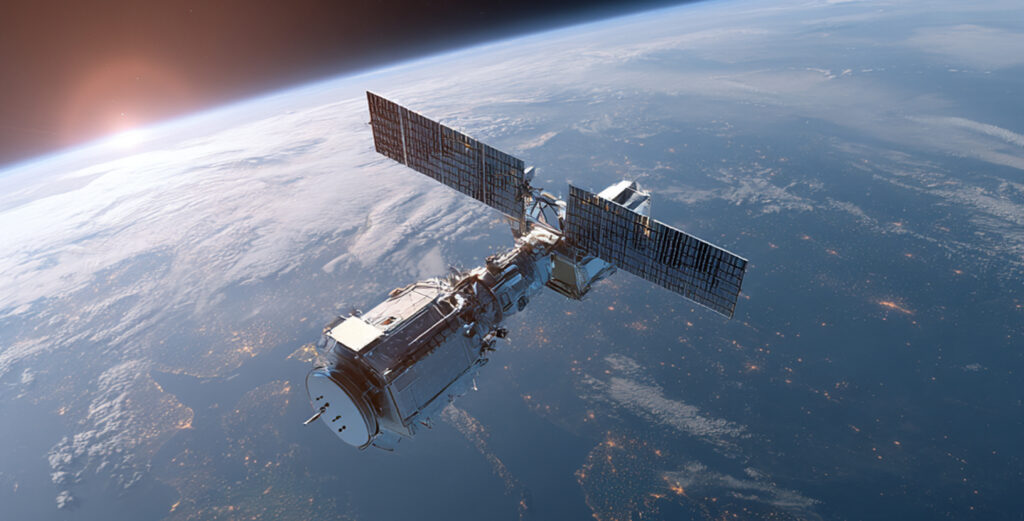
Most investors assume space constraints revolve around rocket supply. That’s not the real friction point. The real constraint is scheduling. Over 11,000 satellites are currently active in orbit. Most small satellites rely on rideshare missions, creating shared schedules and cascading delays. It’s becoming easier to build satellites than to deploy them when timing matters.
- Launch windows are shared
- Test ranges are crowded
- Replacement timelines are stretched
In commercial markets, that means delayed revenue. In defense environments, that can mean degraded readiness. And readiness gaps are not theoretical. They’re strategic.


A Simple Question Most Investors Aren’t Asking
What happens when:
- A satellite fails unexpectedly?
- A defense system needs urgent validation?
- A hypersonic design requires immediate retesting?
If deployment or testing takes months instead of weeks, speed advantages disappear. In modern aerospace, iteration speed is leverage. And leverage compounds.
The Space Economy’s
Delivery Problem
Over 11,000 active satellites orbit Earth today. Thousands more are planned. The small satellite market alone is projected to more than triple this decade. But here’s the structural issue: Most small satellites rideshare. That keeps costs low. But it creates dependency. If the primary payload slips, everyone waits. If the orbit isn’t optimal, you adjust — or compromise. If the manifest is full, you delay.
In other words:
It’s easier to build a satellite than to launch it when you actually need to. That mismatch is where infrastructure players quietly emerge.
Defense Is Moving Toward Speed — Infrastructure Hasn’t Caught Up
The Department of Defense is shifting toward distributed, resilient satellite networks. Hypersonic systems require
repeatable real-world testing. And defense leaders have been explicit:
Iteration cycles must shorten.
But traditional test ranges are congested. Access is limited. Windows are scarce.
Funding alone doesn’t fix that. Access does.
When satellites share a launch:



This Is Where Starfighters Space (NASDAQ: FJET) Enters the Picture
Starfighters isn’t competing with heavy-lift rockets. It isn’t building satellites. It focuses on the bottleneck:
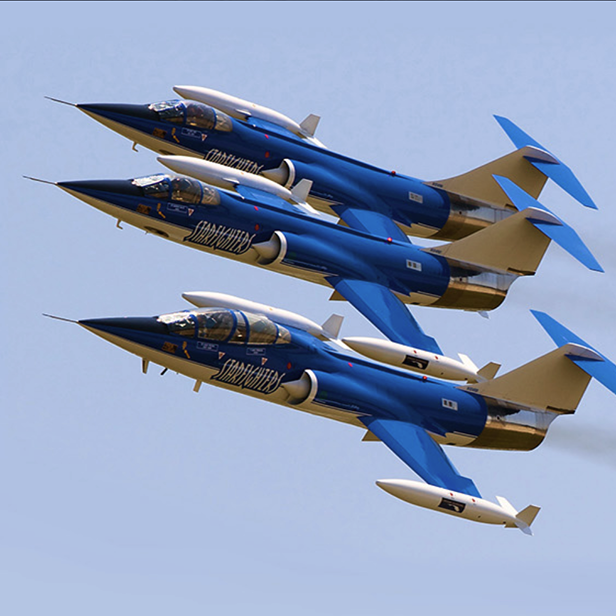
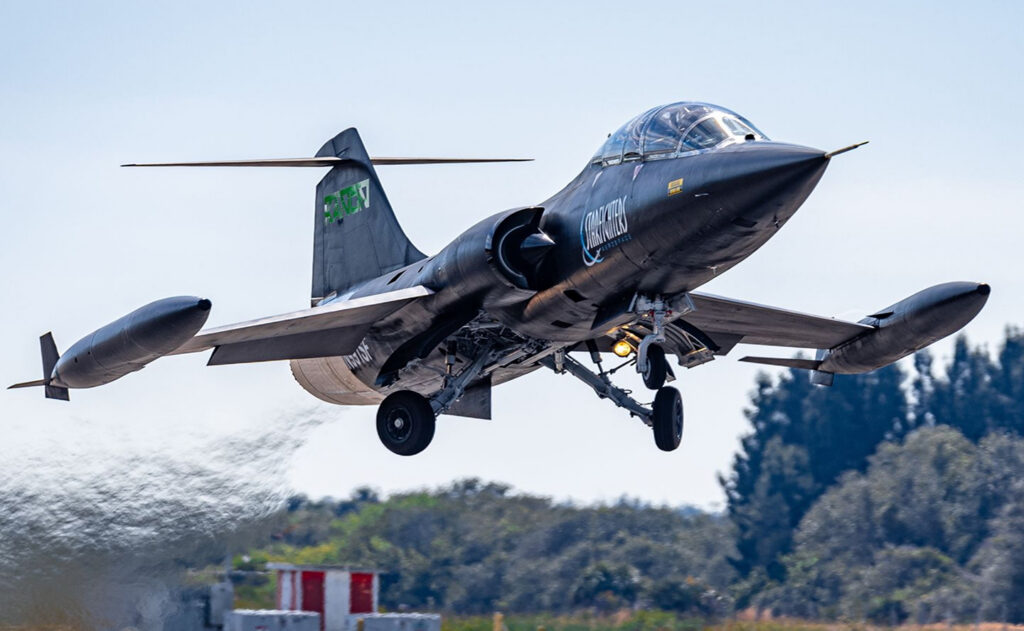
Responsive testing and flexible access. And that positioning is deliberate. Starfighters operates the world’s largest privately held fleet of F-104 supersonic aircraft. These aircraft provide flexible, reusable real-world testing platforms. Major aerospace firms have already utilized these aircraft.
The World’s Largest Privately Owned Supersonic Fleet
Starfighters owns and operates a fleet of F-104 supersonic aircraft capable of sustained Mach 2 flight.
These aircraft are used as flying test platforms for:
• Propulsion systems
• Sensors
• Aerospace components
• Hypersonic-related technologies
Major aerospace firms — including General Electric, Lockheed Martin, and the U.S. Air Force Research Laboratory — have utilized Starfighters’ aircraft. That tells you something important:
Testing capacity is tight enough that commercial alternatives are gaining traction.
It’s a strategic requirement.
The Second Layer: Air-Launch Optionality
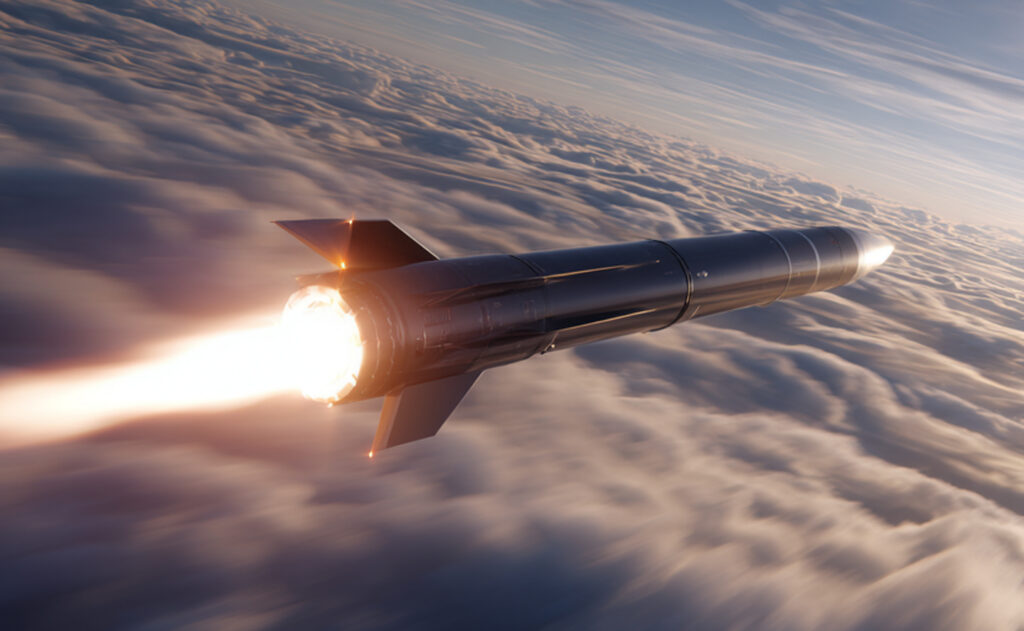
Starfighters is also developing an air-launch model for small payload delivery. Instead of waiting for ground-based launch pads, payloads are carried to altitude by aircraft before ignition.
Air-launch offers:
- Propulsion systems
- Sensors
- Aerospace components
- Hypersonic-related technologies
Major aerospace firms — including General Electric, Lockheed Martin, and the U.S. Air Force Research Laboratory — have utilized Starfighters’ aircraft. That tells you something important:
Testing capacity is tight enough that commercial alternatives are gaining traction.


One Fleet. Two Expanding Markets.
The same supersonic fleet supports:
- Hypersonic testing
- Small satellite air-launch
That dual-use model increases asset utilization — a critical factor in aerospace economics.
And infrastructure businesses often become more valuable as congestion grows.



Why Timing May Matter Now
Consider the convergence:
- Small satellite demand accelerating
- Hypersonic development compressing
- Defense budgets rising
- Launch and test infrastructure constrained
When pressure builds across multiple fronts, solutions tend to attract attention quickly.
And markets tend to reprice relevance before headlines fully catch up.

Important: This Is Not Without Risk
Aerospace is regulated. Execution matters. Customer adoption must scale. Air-launch certification requires progress. Defense budgets can shift. These factors require evaluation. But bottlenecks don’t disappear simply because they’re inconvenient. And infrastructure strain rarely resolves itself without new capacity.
Why Some Investors Are Watching FJET Closely
- Active flight operations today
- Located at NASA’s Kennedy Space Center
- Commercial aerospace validation
- Positioned at visible infrastructure constraints
- Dual-market exposure through one asset base
This is not a spectacle-driven story. It’s a logistics story. And logistics often matter more as industries mature.
Before the Bottleneck
Becomes Obvious
When industries expand, attention focuses on pioneers.
Returns often accumulate around the systems that enable them.
If you want a closer look at how Starfighters Space (FJET) fits into this infrastructure layer — including its fleet, roadmap, and operating model
IMPORTANT NOTICE AND DISCLAIMER
This PUBLICATION is an issuer-paid advertisement. This paid advertisement includes a stock profile of Starfighters Space [FJET]. To enhance public awareness of FJET and its securities, the issuer has provided Promethean Marketing, Inc. (“Promethean”), through a third-party advertiser, with a total budget of approximately Five Hundred Fifty Thousand Dollars ($550,000) to cover the costs associated with this advertisement for a period beginning January 25, 2026 and currently set to end May 2026. The website hosting this advertisement, Investing Letter, is owned by Promethean. As a result of this advertisement, Investing Letter may receive advertising revenue from new advertisers and collect email addresses from readers that it may be able to monetize. Promethean will retain any excess sums after all expenses are paid. As of the date this advertisement is posted to the Investing Letter website, some or all of Promethean, Investing Letter, or the third-party advertiser being utilized by FJET to provide Promethean with the above described advertising budget, and any of their respective officers, principals, or affiliates (as defined in the Securities Act of 1933, as amended, and Rule 501(b) promulgated thereunder) may hold the securities of FJET and may sell those shares during the course of this advertising campaign. This advertisement may increase investor and market awareness, which may result in an increased number of shareholders owning and trading the securities of FJET, increased trading volume, and possibly an increased share price of FJET’s securities, which may or may not be temporary and decrease once the advertising campaign has ended. To more fully understand the Investing Letter website or service, please review its full Disclaimer and Disclosure Policy located at https://investingletter.com/legal-disclaimer/.

© Starfighters Starlaunch. All Rights Reserved.
- https://www.sciencetimes.com/articles/61030/20251230/how-satellite-technology-earth-observation-are-transforming-modern-life.htm
- https://www.weforum.org/stories/2016/09/space-is-a-vital-part-of-the-planets-infrastructure-and-its-more-vulnerable-than-you-might-think-0e39efd5-aa5e-4a80-b5d8-a7181ffa879d/
- https://payloadspace.com/mckinsey-expects-a-shortfall-in-launch-capacity/
- https://starfightersspace.com/starfighters-space-provides-year-end-corporate-update-following-nyse-american-listing/
- https://www.nytimes.com/2026/01/14/technology/ai-ipo-openai-anthropic-spacex.html
- https://www.investopedia.com/terms/p/pick-and-shovel-play.asp
- https://nanoavionics.com/blog/what-is-a-small-satellite-constellation/
- https://www.gminsights.com/industry-analysis/small-satellite-market
- https://www.grandviewresearch.com/industry-analysis/nanosatellite-microsatellite-market
- https://starfightersspace.com/market/
- https://spacenews.com/the-satellite-breakup-militarys-push-to-go-small/
- https://www.nationaldefensemagazine.org/articles/2023/12/14/new-space-strategy-focuses-on-combat-readiness-resiliency
- https://thehill.com/policy/defense/5685814-hegseth-trump-defense-budget-request/
- https://spacenews.com/make-america-test-again-how-rapid-iterative-testing-will-advance-hypersonic-development/
- https://www.rebuilding.tech/posts/closing-the-hypersonic-testing-loop
- https://starfightersspace.com/company/
- https://starfightersspace.com/starfighters-space-demonstrates-commercial-supersonic-flight-capabilities-through-ges-aerospace-test-program/
- https://starfightersspace.com/operations/
- https://starfightersspace.com/operations/
- https://starfightersspace.com/company/
- https://starfightersspace.com/company/
- https://starfightersspace.com/starfighters-space-demonstrates-commercial-supersonic-flight-capabilities-through-ges-aerospace-test-program/
- https://starfightersspace.com/company/
- https://starfightersspace.com/wp-content/uploads/2025/12/StarfightersSpace-Corporate-Presentation-1.pdf